
Regime Change
The law of unintended consequences and what lies beneath

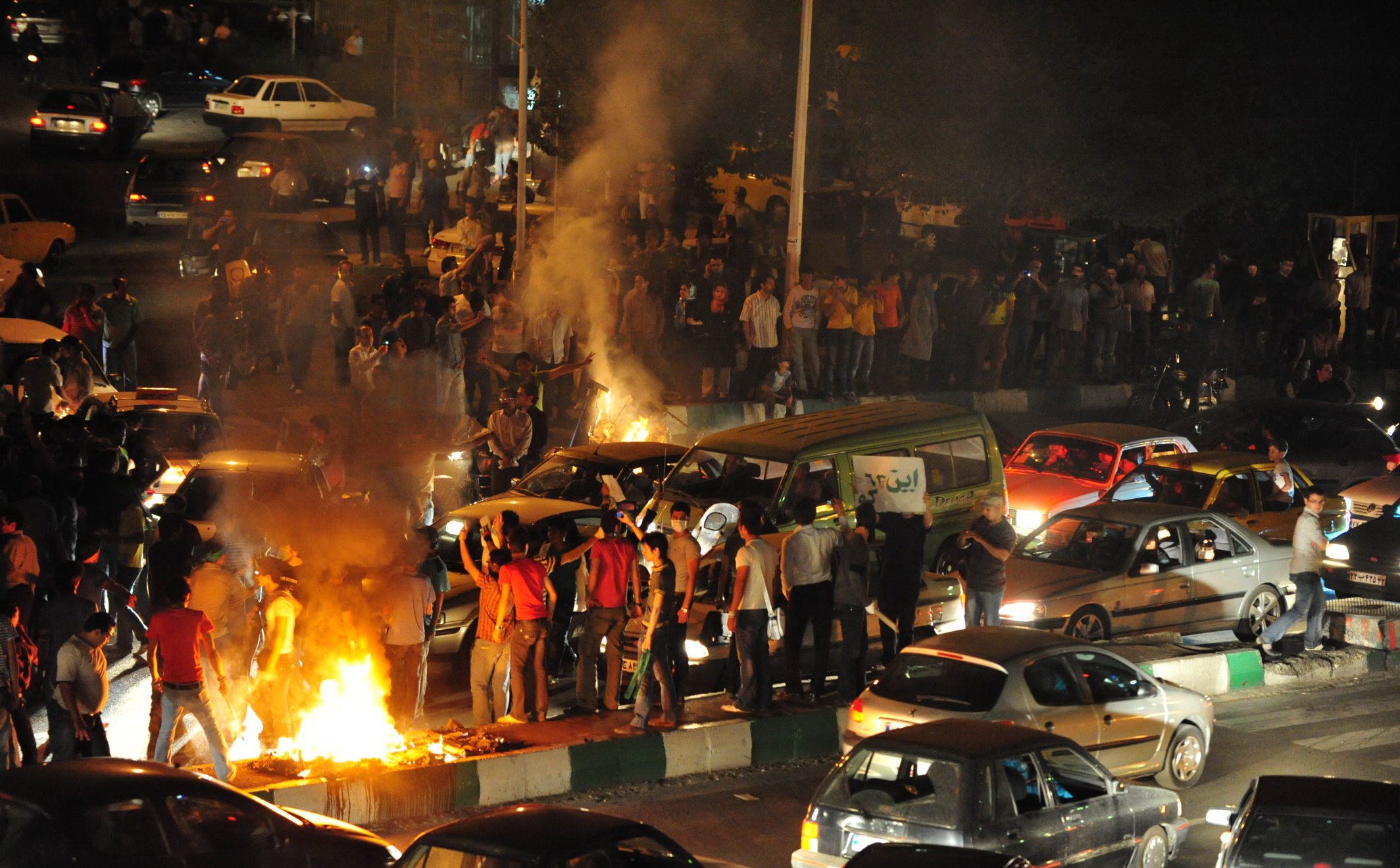
I wrote the following column in 2009, during the first major uprising in Iran since its 1979 revolution, as millions of Iranians protested social and political oppression under the stifling Islamic Republic. We’ll never know what might have happened had the regime fallen then, because Iran’s Supreme Leader Ayatollah Ali Khamenei crushed the so-called Persian Spring using his elite Revolutionary Guard and so-called morality police, who opened fire on marchers, jailing, torturing and killing political opponents. In 2017 and again in 2022, more mass protests broke out in Iran, the latest being the so-called Woman, Life, Freedom movement, which was led by women fed up with restrictive morality laws such as the mandatory wearing of hijabs.
Once again regime change is in the wind, but not because of domestic unrest. Israel and the United States have decimated Iran’s military proxies, Hamas, Hezbollah, and the Houthis, as well as its air defenses, top scientists and military officers. Its Syrian ally has fallen, and the Supreme Leader is 86 years old and in hiding. Now President Donald Trump has bombed Iran’s nuclear facilities, further weakening the regime, but also weakening its domestic opponents, who are rallying behind their country to once again resist the Great Satan, American imperialism.
I have mixed feelings about the president’s decision. Had Trump not torn up the Iran nuclear deal negotiated by President Barack Obama’s administration, there would have been no need to destroy nukes now. But you break it you fix it, and whether or not Iran’s nuclear program has been “obliterated,” it has at least been delayed, perhaps opening a window to renegotiate the original agreement.
As long as it’s a one-off, I’m not particularly disturbed by the U.S. bombing Iran. It’s pure speculation, but I believe the bunker-busting airstrikes were “measured” in the sense that they made their point without doing significant damage to Iran’s nuclear program or civilian population, as evidenced by the fact that Iran’s response was measured; Iran even informed the United States before rocketing our base in Qatar. So it doesn’t seem like they’re overly pissed about the airstrikes, and we got to try out our new war toys.
But if Israeli Prime Minister Benjamin Netanyahu were to lure Trump into another attempt at regime change, as I suggested in my 2009 column, the law of unintended consequences begs the question, what lies beneath?
When I was in college in the 1970s at Southern Illinois University in Carbondale, some Iranian friends and others I interviewed for the school newspaper, the Daily Egyptian (no relation), convinced me the Shah of Iran, Mohammad Reza Pahlavi, was bad. They taught me how he came to power in 1953, when the CIA engineered a coup over the democratically elected socialist Prime Minister, Mohammad Mosaddegh, who wanted to nationalize the oil fields, which were owned by American and British oil companies.
They also taught me about SAVAK, the Shah’s ruthless, CIA-trained security force that used a vast network of informants to track down and torture dissidents. Somehow it didn't occur to my Persian friends, or me, that if it weren't for the Shah's efforts to modernize and Westernize their country, including student exchange programs, and his close relationship with the United States, we wouldn't be having that conversation.
From the Iranians I met, I got a sense of the passion and intensity of the Middle Eastern personality, and their penchant for conspiracy theories. But they were very serious about their politics, as serious as I had been about the recently ended Vietnam War. The growing anti-Shah movement on college campuses used many of the same tactics as American protest groups, with rallies, marches, teach-ins and pamphleteering. And like the antiwar movement, there were all shades of Shah haters, squabbling factions whose one shared goal was to liberate Iran from the Shah’s oppressive rule and American interference.
Some of my Persian friends said they were pacifists, while others said they were militants, democrats, socialists or communists. But none indicated they were Islamic fundamentalists -- the women didn't wear veils and the men dressed like lounge lizards, with shiny shirts. In other words, they tended to blend in with other American college kids in the disco 1970s, and I liked them.
As a former hippie I was both sympathetic and indulgent to their seemingly stuck in the '60s vision of a liberated Iran. After graduating I lost touch with my Iranian friends, but I continued to root for the Iranian "students" who took to the streets of Tehran to demand death to the Shah, right up until the moment in 1979 when they stormed the U.S. Embassy and took Americans hostage, bringing down not only the Shah, but the presidency of Jimmy Carter.
What shocked me even more was that some guy with beady eyes and a turban I'd never heard of named Ruhollah Musavi Khomeini swooped out of France and turned Iran into a repressive, West-hating, Jew-baiting, “Islamic republic," something I couldn't imagine any of my bar-hopping, free-thinking, seriously political Iranian college friends had in mind. They had been, to use another '60s term, "co-opted." Bigtime.
Some years later I was at a Los Angeles fundraiser for a hospital in Israel, and many of the tables had been purchased by members of L.A.’s large and prosperous Iranian Jewish community, many of whom had fled their homeland when the mullahs took over. I happened to be sitting next to an older Iranian woman, and trying to make conversation, I asked her what life had been like under the Shah. To my surprise, she said "not bad."
Drawing on my dim memories of my Iranian college friends, I told her I thought there had been a lot of political prisoners and that SAVAK spied on everyone.
"SAVAK?" she sniffed, starting to get annoyed with me. "SAVAK was all that protected us from the crazy fundamentalists."
Live and learn. Because of how regime change in Iran turned out in 1979, what is going on there today fills me with dread as well as hope. I used to think there could be nothing worse than the Shah. Now I know it's naive to think there could be nothing worse than an Islamic republic.
-30-